

























The Industry Connection platform has established itself as a key catalyst for Mexico’s innovation ecosystem by bringing together startups, investors, and large corporations to address specific technological challenges. Led by the Eugenio Garza Lagüera Institute of Entrepreneurship, this initiative aims to accelerate industrial growth through the adoption of solutions based on artificial intelligence (AI) and applied science.
In its 2026 edition, held at Tec de Monterrey’s Guadalajara Campus, Industry Connection adopted a thematic focus centered on applied artificial intelligence. This move responds to Jalisco’s strategic positioning as one of the country’s main technology hubs, as well as the consolidation of its innovation ecosystem.
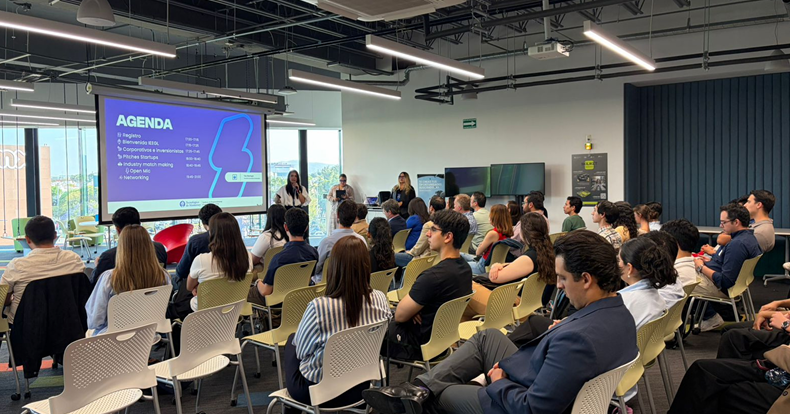
The event brought together 76 participants, 29 of whom actively participated in activities such as pitches, presentations, and matchmaking sessions. This level of participation reflects a growing interest in AI not only as a trend but as a concrete tool for solving business problems and opening up new business opportunities.
One of the pillars of Industry Connection is its ability to connect high-impact startups with key players in the ecosystem. In this edition, eight startups stood out for their innovative proposals, spanning sectors such as legaltech, digital health, logistics, and environmental management.
High-impact startups
Among them is Clario, a legaltech platform that democratizes access to legal services through artificial intelligence, bringing advanced legal capabilities to companies of all sizes. Its solution aims to reduce barriers and optimize corporate legal processes.
Another example is Valarix, which offers a generative AI solution focused on automating tax processes, optimizing tax compliance, and strengthening companies’ accounting safeguards. This startup addresses a critical need in the Mexican business environment.
In the services sector, Operi stands out with a comprehensive SaaS solution aimed at the beauty industry, transforming daily operations into a source of strategic data through advanced analytics. Its approach turns traditional businesses into data-driven organizations.
Another notable offering is Danil, which enables the deployment of “AI employees” capable of operating across various communication channels. This platform represents a leap forward in business automation by coordinating multiple intelligent agents through natural language.
In the environmental sector, Blau offers a smart waste management solution based on real-time digital traceability. Its technology enables the optimization of logistics, cost reduction, and regulatory compliance—an increasingly critical factor for industries.
The healthcare sector also had a prominent presence with initiatives such as Think Health, a comprehensive ecosystem that connects patients, doctors, and the pharmaceutical industry through tools such as electronic health records, telemedicine, and clinical intelligence.
Likewise, MyDoc proposes a significant innovation by converting WhatsApp conversations into structured clinical information, facilitating medical coordination and reducing friction in patient care. This solution aims to improve the efficiency of the healthcare system.
Finally, Bitácora.io rounds out the list of startups with an AI assistant for fieldwork that automates reports and metrics in real time. Its focus on traceability and productivity positions it as a key tool for operational sectors.
Beyond the pitches, Industry Connection included an Open Mic session for early-stage projects, fostering feedback and the development of new ideas. With this model, the platform not only connects talent and capital but also builds an effective bridge toward the implementation of real solutions, establishing itself as a strategic player in Mexico’s digital transformation.