

























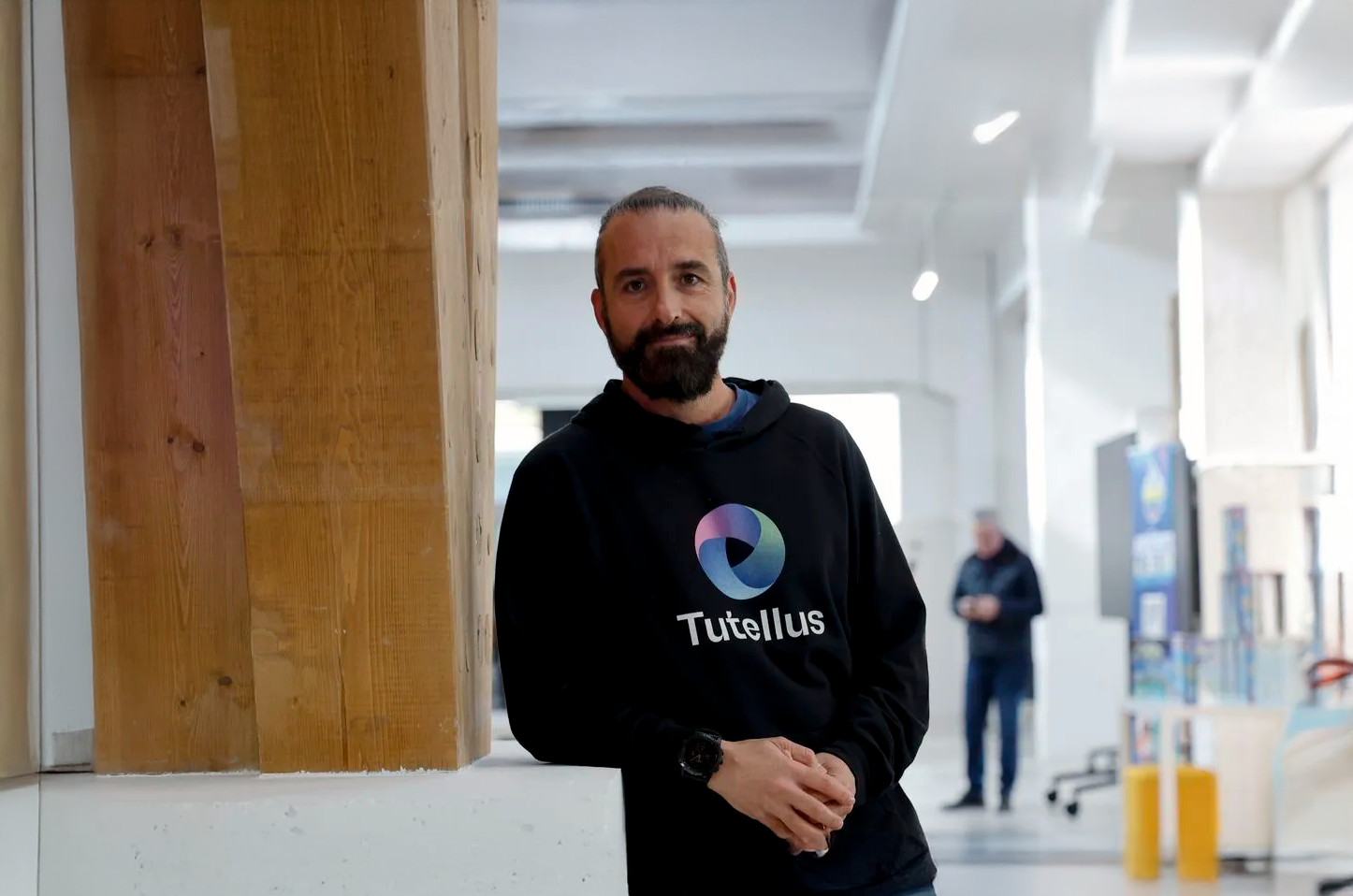
Tutellus is committed to tokenization as a direct way to transform remittances between the United States and Latin America, a market marked by high costs, slowness, and excessive intermediaries. Based on its experience in the Web3 ecosystem, the company proposes a structural change in the way value is transferred through digital assets.
The company has nearly a decade of experience working on projects related to crypto, tokenization, and Web3. Since 2017, Tutellus has been promoting the creation of an ecosystem that allows individuals and companies to adopt these technologies in a practical way, with a special focus on Mexico as a strategic market.
“Mexico is a key player in this vision due to its economic size, its business fabric, and its direct relationship with the flow of remittances from the United States. Tutellus decided to make a firm commitment to the country, with local teams and training programs aimed at companies and professionals interested in tokenization,” Miguel Caballero, CEO and founder of the Spanish startup, told Contxto.
Tokenization allows the value of an asset to be divided into very small parts that are represented by digital tokens. This process facilitates the movement of value without resorting to traditional financial infrastructures, which are often costly, slow, and dependent on multiple intermediaries.
In the case of remittances, the difference is clear. Traditional systems can take between 24 and 48 business hours and charge high fees. Tokenization, using stablecoins, allows money to be sent in seconds, with minimal costs and directly between digital wallets.
The Spanish startup executive explains that tokenized money travels on blockchain infrastructure, not on traditional banking networks. This feature eliminates intermediaries and reduces operational friction, benefiting both the sender and the recipient of the remittance, especially in communities that depend on these transfers for their daily lives.
The impact of tokenization is not limited to remittances. Tutellus has already tokenized nearly US$20 million in Mexico and around US$400 million in assets globally. Among these projects, the real estate sector stands out, where a company born in its ecosystem has become a world leader.
It is important to mention that remittances play an important role in the economies of Latin American countries, as the final count of remittances in 2025 is expected to be around US$158 billion, according to the study Remittance Transfers in 2025: An Analysis of the Year by The Dialogue organization.
Regulation is key to the tokenization of remittances
Despite the progress, the company identifies a clear challenge in Mexico: the regulatory framework. Tokenization is not illegal, but it is also not specifically regulated. This situation causes many Mexican projects to choose to tokenize from other countries with clearer rules.
“Tutellus maintains an open stance toward dialogue with authorities and financial institutions to promote regulation that provides certainty to the sector,” Caballero emphasizes. The company believes that capital and innovation do not stop, and that a lack of regulatory progress could cause investments to move to other markets.
From its perspective, tokenization functions as a new generation of infrastructure for moving value, comparable to the leap from fax to internet. The technology offers greater efficiency, speed, and accessibility, which explains its growing adoption in different sectors.
In the future, Tutellus envisions an environment where tokenization is transparent to the end user. People will not need to understand blockchain to send money, invest, or participate in tokenized projects; it will be enough to use simple and intuitive platforms.
Latin America is committed to tokenization and stablecoins
Latin America and the Caribbean are positioning themselves as global leaders in the adoption of stablecoins, driven by high remittance costs, the need for fast payments, and the widespread use of mobile technology, according to Citigroup’s Stablecoins 2030 study.
According to Fireblocks, 71% of companies in the region already use stablecoins for cross-border payments, and 75% of fintechs report growing demand.
Countries such as Brazil, Mexico, Argentina, and Colombia are integrating these assets into digital commerce and foreign exchange operations. Initiatives such as BBRL in Brazil and COPW in Colombia reflect this progress.
This context makes the region a key laboratory for blockchain and tokenization, with a global stablecoin market that could reach US$1.9 trillion by 2030.