
























Medellín doesn’t need to prove it can be an innovation hub; it already is. The city scored 63 points on GEIAL’s 2025 Dynamic Entrepreneurship Conditions Index, alongside cities such as São Paulo, Santiago de Chile, and Montevideo. The region is home to 25% of venture-capital-backed startups in Colombia, with a growing network of incubators, institutions, and companies.
The question is no longer whether Medellín can do it, but what is needed for the momentum that has been building to become a full economic cycle where entrepreneurs create, capital finances, the market consumes, and the economy benefits. The three pieces that are still missing are more specific than they seem.
First, believing in it
In Medellín, there is a paradox: the city has an enormous number of conditions to be an entrepreneurial powerhouse, but part of the ecosystem continues to look outward for validation.
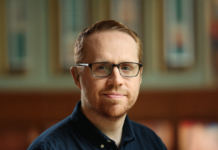
Tomás Ríos, director of On.going, EAFIT’s Center for Impact Entrepreneurship, tells Contxto how he has observed this firsthand. When EAFIT University President Claudia Restrepo assessed the state of entrepreneurship at the university in 2021, she discovered that fewer than 5% of Colombia’s highest-impact startups had founders from EAFIT. The solution: create On.going to bring entrepreneurship out of its academic silo and connect it with the real ecosystem.
Four years later, the center has incubated nearly 190 initiatives, 40% of which have become formal businesses, generating jobs and paying taxes. But beyond the numbers, what’s most interesting is the commitment to not stop there.
Recently, EAFIT, Fundación Fraternidad Medellín, Universidad EIA, and On.going partnered to launch U Ventures, the first venture capital fund in Colombia designed to invest in university talent. “Out of every thousand ideas, perhaps four grow and scale,” explained Ríos. “To have 40 great companies in the future, you need ten thousand ideas today.”
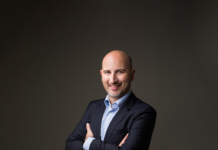
It’s a commitment to building from the ground up, not importing models from abroad. And that connects with what’s happening on the other side of the ecosystem. Juan Gabriel Arboleda, CEO of Starter Company, has spent seven years building what is now one of the largest startup events in Latin America.
The 2025 edition brought together 13,000 attendees from 20 countries, 340 startups, and more than 160 investment funds. Together with the Medellín mayor’s office and Ruta N, this year they launched Road to StartCo, a program that trains more than 1,000 entrepreneurs from the traditional sector on the innovation ecosystem.
It is precisely this ecosystem full of opportunities that Michael Puscar, a U.S. serial entrepreneur, refers to when he says: “Let’s stop saying that Medellín is the next Silicon Valley—it doesn’t have to be that way. Why don’t we create our own thing here, something different, something unique?”
Puscar arrived in 2011, when Ruta N was just getting started. Three successful startups later, the city of Medellín captivated him enough to make him stay. That is the same advice he would give to Colombian founders thinking of moving to other countries: “Stay. There is a lot of talent here.”
The locals call that combination of tenacity and creativity “perrenque”—the drive that keeps someone pushing forward when everything seems over. The ecosystem has plenty of perrenque; what it needs is for that drive to be accompanied by two things that don’t depend solely on the entrepreneurs.
Capital and consumption: the bottlenecks
“The United States is 60 years ahead of us in venture capital,” says Arboleda. “It’s not that they have something we don’t. We’re simply behind on the timeline.” Ríos agrees from an academic perspective, noting that only 2% of university startups in Latin America manage to scale. Without support and funding systems like U Ventures or Road to StartCo to sustain ideas from the earliest stage, the pipeline collapses before it can produce results.
Puscar, which also invests through the Puscar Buriticá Family Office, sees this firsthand. Medellín’s family offices remain anchored in real estate and mining. “The young people in those family offices do want to invest in technology. But there’s still a perception that it’s very risky.” The result: entrepreneurs end up seeking capital in Delaware, not in El Poblado.
The second gap is the domestic market. Medellín produces many founders, but they end up preferring to sell to Bogotá and Mexico City because local consumption doesn’t absorb what’s built here. “I live here, but a high percentage of my clients are in Bogotá and Mexico City,” says Arboleda.
These are two gaps that aren’t filled with more incubators or events; they’re filled through corporate engagement. After the investment wave between 2019 and 2021, the market correction seems to have dampened the interest of large corporations—and that’s exactly what’s needed most.
When corporations buy local solutions, consumption is generated. When family offices invest in local startups, capital is generated. And when both stay in the city, the economic cycle that drives innovation is strengthened.
That is why the ecosystem does not need more talk about innovation. It needs the companies that are already here to put real resources on the table.
What’s Next
Medellín has something other cities in the region do not: the pieces are already on the board. Academia is building a pipeline through initiatives like U Ventures. The private sector is connecting startups with capital through StartCo. International entrepreneurs and investors like Puscar are choosing to stay and build from here. The local government has made its bet.
What’s missing isn’t vision. It’s commitment from the local private sector. If Medellín’s major companies commit to the ecosystem with the same conviction they bring to their international investments, the city will cease to be an emerging hub and become a consolidated one. The talent is here. The infrastructure is there. What Medellín needs now is for its own stakeholders to stop treating it as something that will happen in the future and start building it as what it already is.